The Default Transaction Configuration section defines how Bills from Ramp will be created in FENXT. These default values ensure all transactions meet the required fields in FENXT's APIs and help streamline transaction processing.
This guide explains how to configure the Bills tab within the Default Transaction Configuration screen.
Accessing the Bills Tab
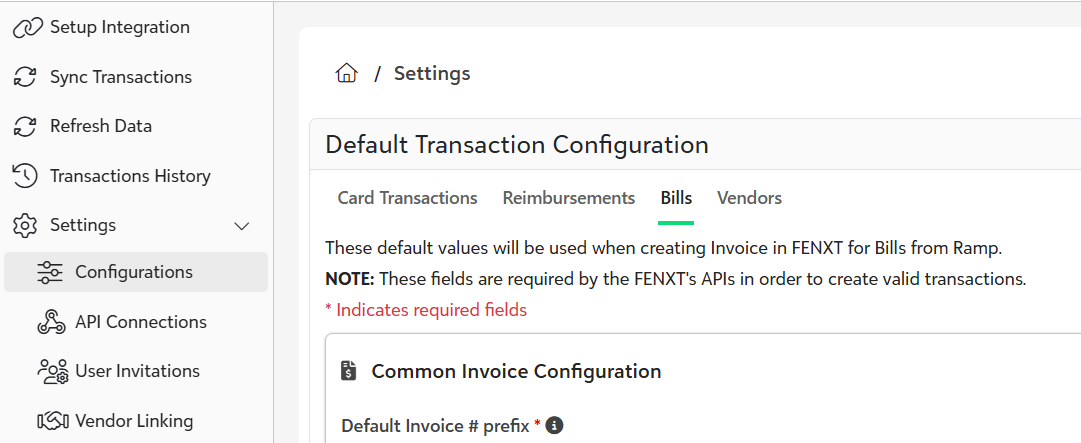
- Navigate to Settings > Configurations > Bills
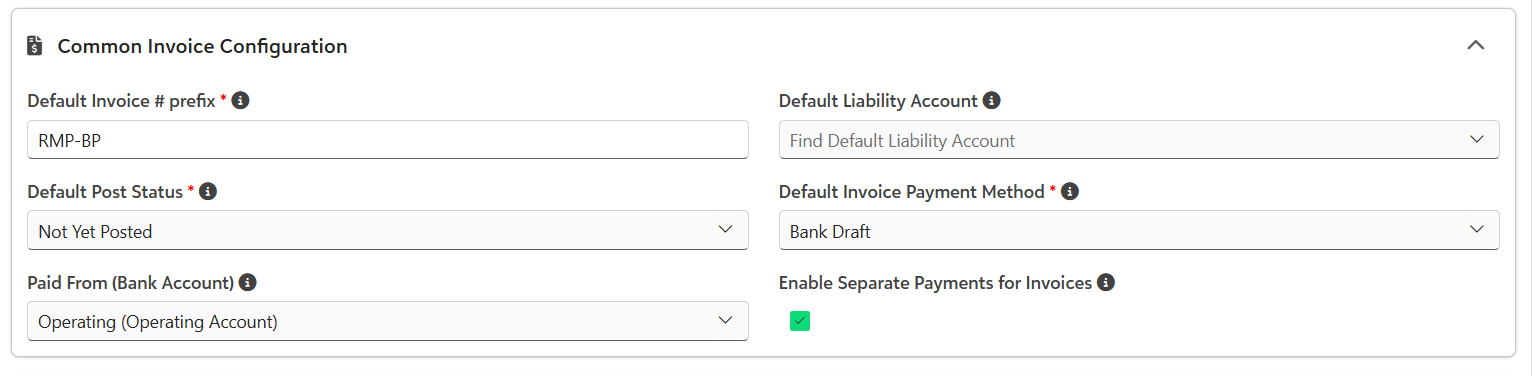
Common Invoice Configurations
For Invoices, the default settings are as follows:
- Invoice # Prefix - Prefix of the invoice number to be used when the invoice is created in FENXT.
- Liability Account - By default, only 20 records will be shown. You can search in this field to select which account you would like to set as the default.
- Invoice Payment Method - Set the default payment method to be listed on the invoice.
- Post Status - Determine the default post status when the invoice is created. Options are Not Yet Posted or Do Not Post.
- Paid from (Bank Account):
- Enable Separate Payments for Invoices:
Attachment Syncing & Defaults
For Invoices, the default settings are as follows:
- Attachment Type - Select which attachment type to be used when attachments are passed to FENXT.
- Turn off Attachment Syncing: When this is turned on, attachments from Ramp will not sync into FENXT. It is not recommended that you use this setting.

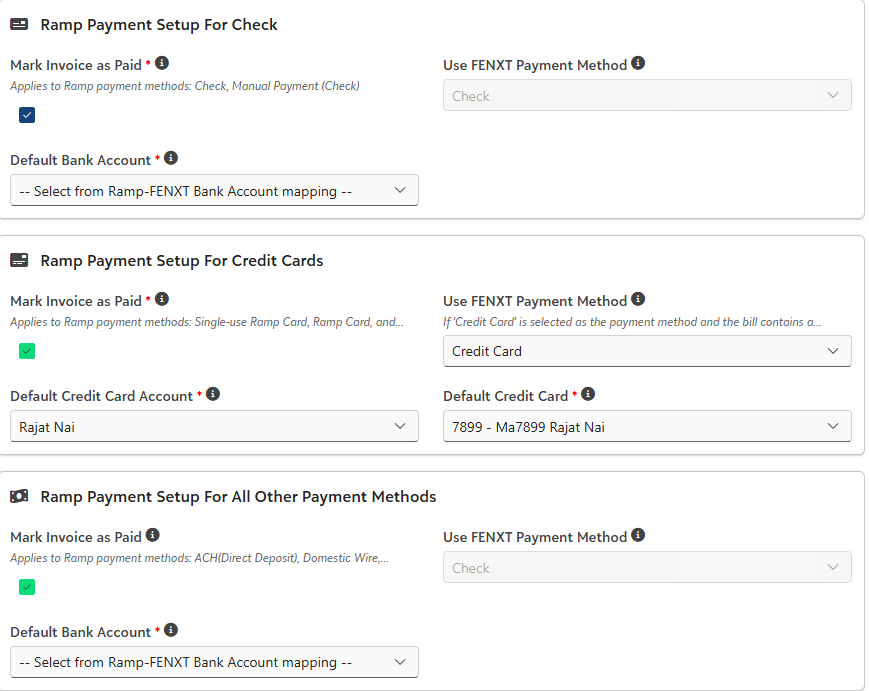
Payment Settings
- Payment Setup for Check
- Mark Invoice as Paid - Option to mark invoice as paid when it comes into FENXT when using the check payment method.
- Default Bank Account - Select the default bank account to be used when the payment is check.
- Use FENXT Payment Method - The payment method will be used while creating payment for the invoice when bill is paid with Check type of Payment.
- Payment date behavior - When marked as paid, the check payment date created in FENXT will use the Ramp Initiated Date.
- Payment Setup for Credit Card
- Mark Invoice as Paid - Option to mark invoice as paid when it comes into FENXT when using the credit card payment method.
- Use FENXT Payment Method - Select the default credit card account for the invoice payment.
- Default Credit Card - The Credit Card for Invoice Payment.
- Default Credit Card Account - The Credit Card Account for Invoice Payment
- Payment date behavior - When marked as paid with a Credit Card, FENXT uses the invoice date as the payment date.
- When we use Check as a Payment Method for Credit Cards FENXT uses the ramp Paid on Date.
- Mark Invoice as Paid - Option to mark invoice as paid when it comes into FENXT when using the credit card payment method.
- Ramp Payment Setup for All Other Payment Methods
- Mark Invoice as Paid - Select this option to automatically mark invoices as paid in Financial Edge NXT when they are paid using supported non-card Ramp payment methods.
- This setting applies to Ramp payment methods such as:
- ACH/Direct Deposit
- Domestic Wire
- International Wire
- Other non-card payment methods, where supported
- Default Bank Account - The bank account for invoice payment
- Use FENXT Payment Method - The payment method will be used while creating payment for the invoice when bill is paid with any other method in check or card.
- Payment date behavior - When marked as paid with a Credit Card, FENXT uses the invoice date as the payment date.
New Vendor Setup Defaults
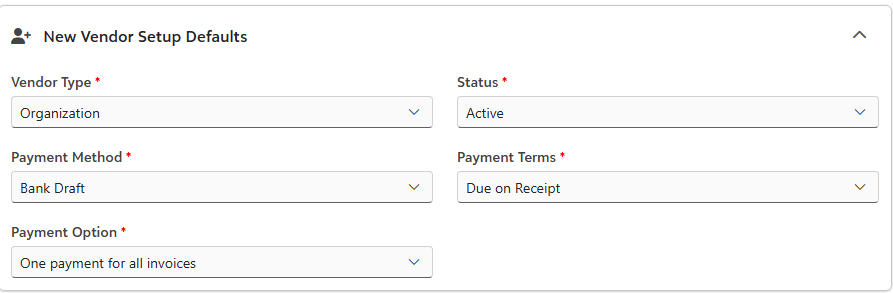
When a new vendor is created in FENXT, select the defaults to be set for this new vendor once it has been created:
- Enable Manual Payments - Whether or not to accept manual payments for this new vendor.
- Vendor Type - Select Individual or Organization
- Status - Active, Inactive or On hold
- Payment Method - Bank Draft, Check, Credit Card or Electronic Funds Transfer
- Payment Terms - What terms you would like to use when this vendor is created
- Payment Option - One payment for all invoices or one payment per invoice.
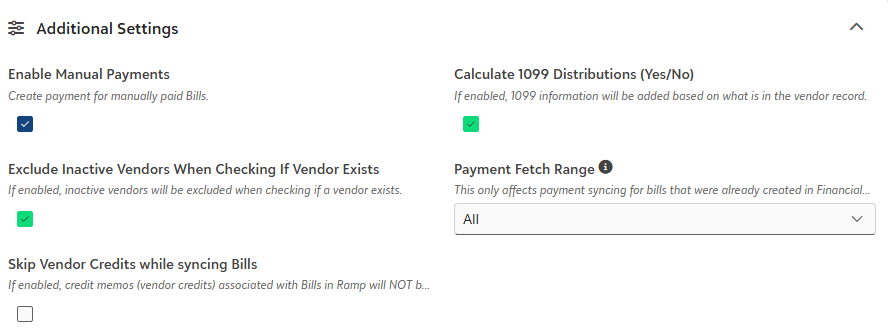
Additional Settings
- Calculate 1099 Distributions - If your organization utilizes 1099 Distributions in Ramp, use this setting to add the 1099 information based on what is in the vendor record.
- Apply Same Projects to Credit Distributions - Copy project from debit distributions.
- Apply Same Transaction Codes to Credit Distributions - Copy Transaction Codes to Credit Distributions.
- Apply Same Account Class to Credit Distributions - Copy account class from debit distributions.
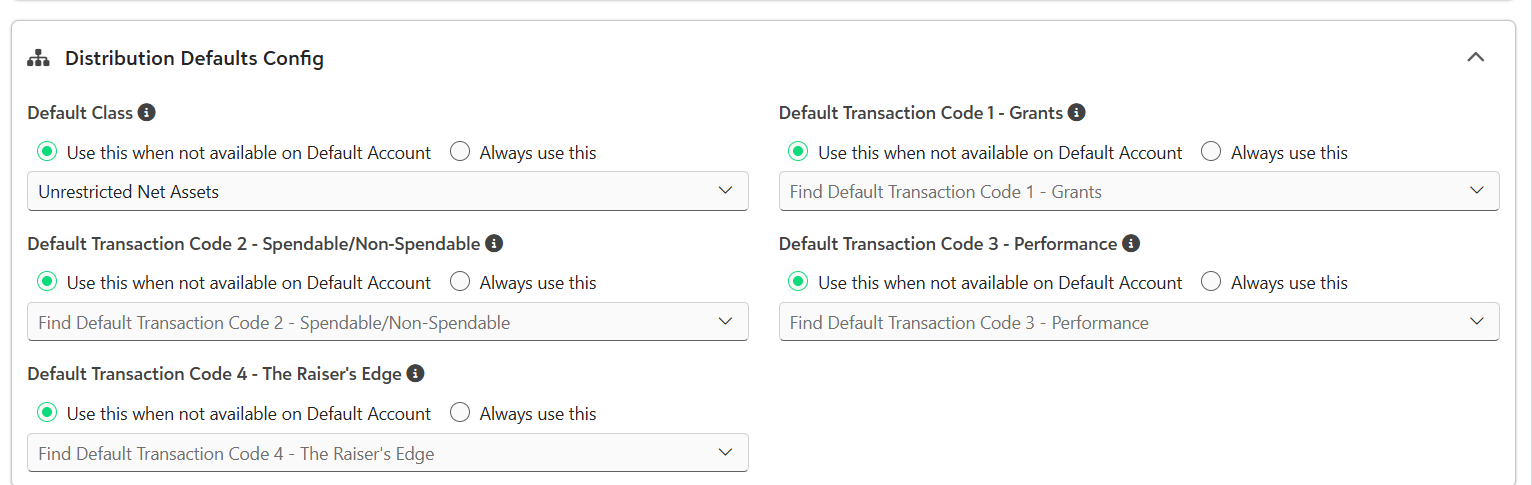
Distribution Defaults Config
- Class - By default, only 20 records will be shown. You can search in this field to select which account you would like to set as the default.
- Transaction Codes - If your organization uses the transaction codes, select for each transaction code whether you would like to use the code when not available on the Default Account or to Always use this.
NOTE: Once you have finished setting your defaults, be sure to click the Save Bills Defaults button to save your new settings.
Was this article helpful?
That’s Great!
Thank you for your feedback
Sorry! We couldn't be helpful
Thank you for your feedback
Feedback sent
We appreciate your effort and will try to fix the article